
 Project home
j. SFT1 evaluation templates
General
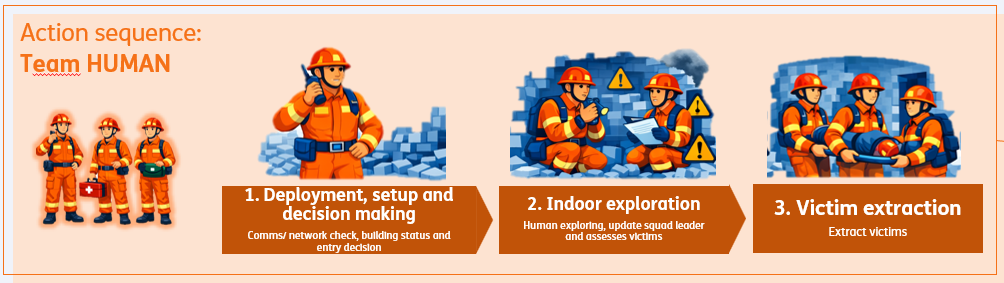 | ||
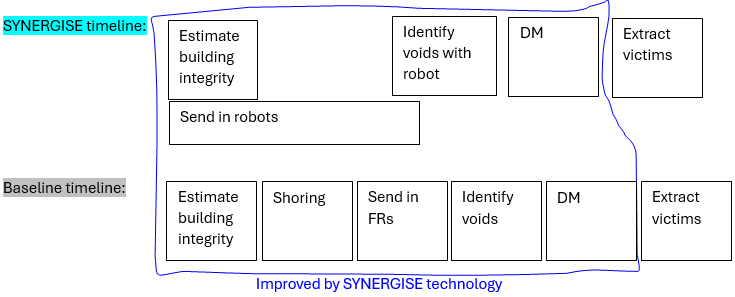
| Baseline phases | Who fills it | Main purpose |
| Briefing | - | - |
| Estimate building integrity | - | - |
| Shoring | Particpants | (make estimation about shoring time) |
| Before sending in FRs (DM) | Participant | Ground truth/ baseline SA |
| Send in FRs, identify voids, DM | Evaluation leader | Objective performance, safety, timing, decision making |
| FRs exit building | Participant | Subjective SA, trust, workload, decision making |
| Hotwash | ||
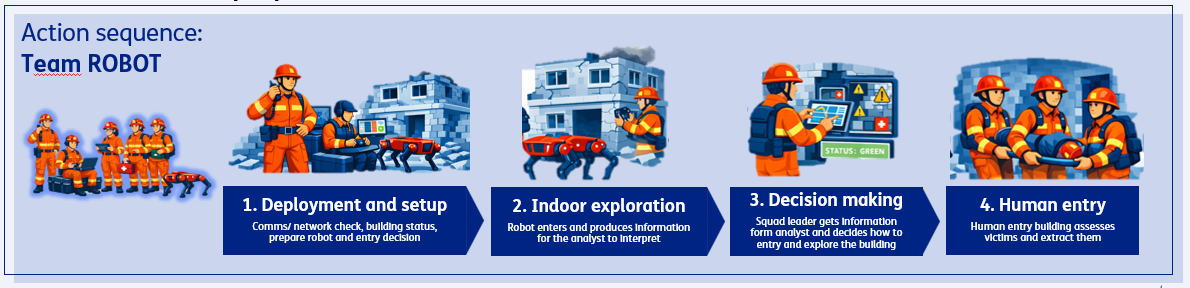 | ||
| SYNERGISE phases | Who fills it | Main purpose |
| Briefing | - | - |
| Estimate building integrity | - | - |
| Send in robots, identify voids with robots | - | - |
| Decision Making (DM) | Participants (Squad/ team leader) | Ground truth/ baseline SA |
| Send in FRs ? | Evaluation leader | Objective performance, safety, timing, decision making |
| After test | Paricipant | Subjective SA, trust, workload, decision making |
| Hotwash | ||
List of ground truths needed for comparison:
- Health ranges
- hazards/ victims in buildings
- Safest path within buildings
- State of automation (tech question)
Before humans enter a building/ hazard
| Claim | Measurement | What is recorded | Who records |
| CL01 Safety | Ground-truth safe paths | predefined safe/ suboptimal / unsafe paths | Evaluation leader |
CL01 Safety | Chosen entry path | Intended entry path selection | Squad/ Team leader (informed by Robot analyst) |
CL02 Situation Awareness | Reported hazards, victims, layout (pre) | Sketch / map / description of interior | Squad/ Team leader, Entry team, Robot analyst (separately) |
CL02 SA | Robot‑based expectations | Expected hazards / victims from robot data | Robot analyst |
CL03–05 Mission effectiveness | Baseline trust (optional) | Initial trust in system/ robot | Squad/ Team leader, Robot operator, Robot analyst |
CL06 Health | Acceptable health ranges | HR, temp thresholds | Evaluation leader |
CL07 Efficiency | Mission start timestamp | End briefing → start | Evaluation leader |
During humans/robots are inside building/ hazard
| Claim | Measurement | What is recorded | Who records |
CL01 Safety | Near‑incidents | Unsafe situations / close calls | Evaluation leader |
CL01 Safety | Hazard avoidance | Avoided predefined hazards | Evaluation leader |
CL02 SA | Executed path | Actual path taken | Evaluation leader, Engage system/ location sensors  |
CL02 SA | Path deviations | Deviations + cause (something for after instead?) | Squad/ Team leader, Entry team |
CL02 SA | Interpretations of robot images | ...? | Robot analyst (and Base or Operations/ LEMA ?) |
CL02 SA (Optional) | Robot control actions | Overrides, manual interventions | Robot operator |
CL06 Health | Threshold breach | Breach moment (HR, temp, stress | Evaluation leader |
CL06 Health | Detection & intervention | Detection with corresponding action | Evaluation leader |
CL07 Efficiency | Entry timestamp | Entry team enters OR robot enters | Evaluation leader |
CL07 Efficiency | Exit timestamp | Entry team exits OR robot exits | Evaluation leader |
After humans/robots exited building/hazard
| Claim | Measurement | What is recorded | Who records |
CL01 Safety |
Decision quality (retro) |
“How good were decisions?” | Squad/ Team leader, Entry team, Robot operator, Robot analyst, Baes of Operations/ LEMA |
CL01 Safety | Error reflection | Reflected unsafe choices | Squad/ Team leader, Robot operator, Robot analyst |
CL02 SA | Reported hazards, victims, layout (post) | Sketch / map / description | Squad/ Team leader, Entry team, Robot analyst |
CL03 Effectiveness | Workload | Short NASA‑TLX | Squad/ Team leader, Entry team, Robot operator, Robot analyst, Baes of Operations/ LEMA |
CL04 Effectiveness | Trust | Trust survey / interview | Squad/ Team leader, Entry team , Robot operator, Robot analyst, Baes of Operations/ LEMA |
CL05 Effectiveness | Decision confidence | Confidence in own judgments | Squad/ Team leader, Robot operator, Robot analyst |
CL06 Health | Health issue handling | Adequacy & timeliness | Evaluation leader (+ expert) |
CL07 Efficiency | Total mission duration | Start (end briefing) till end | Evaluation leader |
Templates per role
Template: Evaluation leader (Field) | |
| Before start scenario | |
General: Trial type/ Building/ scenario ID: ................................. | Date/ Time: ....................................... | Condition (encircle): Baseline / SYNERGISE-tech supported | |
System & mission readiness (Tick list based on predefined acceptable ranges. Cross out if not applicable.) | ☐ C3I operational, describe: ....................................................................................................................................................................................................................... ☐ Health & location sensors connected, describe: ..................................................................................................................................................................................... ☐ Acceptable/ baseline health ranges defined (HR, temperature, etc.), describe: ..................................................................................................................................... ☐ OWL operational, describe: ..................................................................................................................................................................................................................... ☐ ANYmal operational, describe: ................................................................................................................................................................................................................ ☐ ANYmal with robot arm operational, describe: ........................................................................................................................................................................................ ☐ ANYmal with SNAKE, describe: .............................................................................................................................................................................................................. |
| PRE-ENTRY PHASE (after briefing; before actual start of scenario) | |
| Let Team leader (and entry team?) sketch/ describe hazard, victims, layout | Notes:
|
Threshold breached, alert and intervention record | Health threshold breached (timestamp + action taken) Alert detection by system (timestamp + action taken) Intervention started (timestamp + action taken) |
| DURING ENTRY PHASE | |
Time within building/ hazard zone (humans) | Timestamp of entering:..................................................................................... | Timestamp of exiting:........................................................................................................... |
Time within building/ hazard zone (robots) | Timestamp of entering:..................................................................................... | Timestamp of exiting:........................................................................................................... |
Safety observations | ☐ No unsafe situations observed ......................................................................................................................................................................................................................................................................... |
Path deviations observed (Check if the entry team takes the route that is discussed before entering) | ☐ None ☐ Minor ☐ Major Notes: |
| POST EXIT PHASE (hot wash) | |
| Give every role their questionnaire | |
| Plenary questions: | ...?? |
Template: Squad/ Team leader (Field) | ||||||||||||||||||||||||||||||||||||||||||||||||||||||||||||||||
General: Trial type/ Building/ scenario ID: ................................. | Date/ Time: ....................................... | Condition (encircle): Baseline / SYNERGISE-tech supported | ||||||||||||||||||||||||||||||||||||||||||||||||||||||||||||||||
| PRE-ENTRY PHASE (after briefing; before actual start of scenario) | ||||||||||||||||||||||||||||||||||||||||||||||||||||||||||||||||
(CL01) Safety Plan Confirmation | Mark chosen entry path on provided building map. Sketch or describe entry path. (Sketch space)
| |||||||||||||||||||||||||||||||||||||||||||||||||||||||||||||||
| (CL02) Situation Awareness (SAGAT; Endsley 1988): | List expected hazards and victims. (Bullets and/ or sketch)
| |||||||||||||||||||||||||||||||||||||||||||||||||||||||||||||||
| (CL02) Situation Awareness interior (SAGAT; Endsley 1988): | Sketch/ Describe expected interior layout. (Sketch space)
| |||||||||||||||||||||||||||||||||||||||||||||||||||||||||||||||
| (CL04) Trust in automation (Baseline Scale of Trust in Automated Systems; Jian et al. 2000). IF SYNERGISE TECH SCENARIO |
| |||||||||||||||||||||||||||||||||||||||||||||||||||||||||||||||
| DURING ENTRY PHASE | ||||||||||||||||||||||||||||||||||||||||||||||||||||||||||||||||
| (CL02 optional; if pause is feasable) Situation Awareness (mid-mission SAGAT probe; Endsley 1988) | Where are you team members now and what hazards are near them? (Sketch space)
| |||||||||||||||||||||||||||||||||||||||||||||||||||||||||||||||
| POST EXIT PHASE (hot wash) | ||||||||||||||||||||||||||||||||||||||||||||||||||||||||||||||||
(CL01) Safety Decision Quality Rating (AAR-based; U.S. Army, 1993): |
| |||||||||||||||||||||||||||||||||||||||||||||||||||||||||||||||
(CL01) Safety Error Self-Assessment | List any unsafe or mistaken decisions you recognize from this mission (if any). (Provide brief descriptions)
| |||||||||||||||||||||||||||||||||||||||||||||||||||||||||||||||
(CL02) Situation Awareness (Post-Scenario SAGAT) | From memory, sketch the interior layout and mark all hazards and victims encountered. (Sketch space and bullets)
| |||||||||||||||||||||||||||||||||||||||||||||||||||||||||||||||
| (CL03) Workload (NASA-TLX; Hart & Staveland 1988) |
| |||||||||||||||||||||||||||||||||||||||||||||||||||||||||||||||
(CL04) Trust (Post-Use Trust in Automation scale; Jian et al. 2000) IF SYNERGISE TECH SCENARIO |
| |||||||||||||||||||||||||||||||||||||||||||||||||||||||||||||||
(CL05) Decision Confidence: |
| |||||||||||||||||||||||||||||||||||||||||||||||||||||||||||||||






Template: Robot operator | |||||||||||||||||||||||||||||||||||||||||||||||||||||||||||||||||||||||||||||||||||||||||||||||||||||||||
General: Trial type/ Building/ scenario ID: ................................. | Date/ Time: ....................................... | Condition (encircle): | |||||||||||||||||||||||||||||||||||||||||||||||||||||||||||||||||||||||||||||||||||||||||||||||||||||||||
| PRE-ENTRY PHASE (after briefing; before actual start of scenario) | |||||||||||||||||||||||||||||||||||||||||||||||||||||||||||||||||||||||||||||||||||||||||||||||||||||||||
| (CL04) Trust in automation (Baseline Scale of Trust in Automated Systems; Jian et al. 2000). | Before entering, list the hazards or victims you expect to encounter, based on briefing info. (Bullets)
| ||||||||||||||||||||||||||||||||||||||||||||||||||||||||||||||||||||||||||||||||||||||||||||||||||||||||
(CL02) Situation Awareness Robot Reconnaissance data understanding (OPTIONAL; is more important for the analyst) | After the robot’s initial run but before humans enter, list any hazards, obstacles, or victims that you (as operator) detected or suspect from the robot’s feed. (Open list)
| ||||||||||||||||||||||||||||||||||||||||||||||||||||||||||||||||||||||||||||||||||||||||||||||||||||||||
| DURING ENTRY PHASE | |||||||||||||||||||||||||||||||||||||||||||||||||||||||||||||||||||||||||||||||||||||||||||||||||||||||||
| (CL02/ CL04) Operational notes | Logging of manual control or override the robot's/ system's suggestions (with timestamp) as well as any alerts ignored.
| ||||||||||||||||||||||||||||||||||||||||||||||||||||||||||||||||||||||||||||||||||||||||||||||||||||||||
| POST EXIT PHASE (hot wash) | |||||||||||||||||||||||||||||||||||||||||||||||||||||||||||||||||||||||||||||||||||||||||||||||||||||||||
(CL01) SafetyTeam Decision Appraisal: |
| ||||||||||||||||||||||||||||||||||||||||||||||||||||||||||||||||||||||||||||||||||||||||||||||||||||||||
(CL01) Safety Error Reflection | List any mistakes or unsafe decisions you think occurred regarding robot deployment. (Open question)
| ||||||||||||||||||||||||||||||||||||||||||||||||||||||||||||||||||||||||||||||||||||||||||||||||||||||||
(CL02) Situation Awareness (Post-Scenario SAGAT) | Describe what the robot observed/ found during the mission (e.g. hazards, obstacles) for navigation purposes. (Sketch space and bullets)
| ||||||||||||||||||||||||||||||||||||||||||||||||||||||||||||||||||||||||||||||||||||||||||||||||||||||||
| (CL03) Workload (NASA-TLX; Hart & Staveland 1988) |
| ||||||||||||||||||||||||||||||||||||||||||||||||||||||||||||||||||||||||||||||||||||||||||||||||||||||||
(CL04) Trust (Post-Use Trust in Automation scale; Jian et al. 2000) IF SYNERGISE TECH SCENARIO |
| ||||||||||||||||||||||||||||||||||||||||||||||||||||||||||||||||||||||||||||||||||||||||||||||||||||||||
(CL05) Confidence in Robot-Related Decisions: |
| ||||||||||||||||||||||||||||||||||||||||||||||||||||||||||||||||||||||||||||||||||||||||||||||||||||||||
Template: Robot analyst | |
General: Trial type/ Building/ scenario ID: ................................. | Date/ Time: ....................................... | Condition (encircle): | |
| PRE-ENTRY PHASE (after briefing; before actual start of scenario) | |
(CL02) Situation Awareness Robot Reconnaissance Assessment (SAGAT expected situation report) | Based on the robot’s pre-entry scan, list the hazards, victims, and notable features you have identified or expect inside. (Bullets and/or sketch)
|
Template: Entry team member | |||||||||||||||||||||||||||||||||||||||||
General: Trial type/ Building/ scenario ID: ................................. | Date/ Time: ....................................... | Condition (encircle): Baseline / SYNERGISE-tech supported | |||||||||||||||||||||||||||||||||||||||||
| PRE-ENTRY PHASE (after briefing; before actual start of scenario) | |||||||||||||||||||||||||||||||||||||||||
(CL02) Situation Awareness (Pre-mission knowledge check): | Before entering, list the hazards or victims you expect to encounter, based on briefing info. (Bullets)
| ||||||||||||||||||||||||||||||||||||||||
| (CL04) Trust in automation (Baseline Scale of Trust in Automated Systems; Jian et al. 2000). IF SYNERGISE TECH SCENARIO |
| ||||||||||||||||||||||||||||||||||||||||
| DURING ENTRY PHASE | |||||||||||||||||||||||||||||||||||||||||
| (CL02 optional; if pause is feasable) Situation Awareness (mid-mission SAGAT probe; Endsley 1988) | Any new hazads? (Bullets)
| ||||||||||||||||||||||||||||||||||||||||
| POST EXIT PHASE (hot wash) | |||||||||||||||||||||||||||||||||||||||||
(CL01) Safety - Team Decision Appraisal: |
| ||||||||||||||||||||||||||||||||||||||||
(CL02) Situation Awareness Post Operation Recall | Describe the layout and list all hazards/victims that were found. (Sketch and describe)
| ||||||||||||||||||||||||||||||||||||||||
| (CL03) Workload (NASA-TLX; Hart & Staveland 1988) |
| ||||||||||||||||||||||||||||||||||||||||
(CL04) Trust (Post-Use Trust in Automation scale; Jian et al. 2000) IF SYNERGISE TECH SCENARIO |
| ||||||||||||||||||||||||||||||||||||||||
(CL05) Decision Confidence |
| ||||||||||||||||||||||||||||||||||||||||
Template: Base of Oparations (LEMA) | |
| Before start scenario | |
General: Trial type/ Building/ scenario ID: ................................. | Date/ Time: ....................................... | Condition (encircle): Baseline / SYNERGISE-tech supported |