
 Project home
j. SFT1 evaluation templates
General
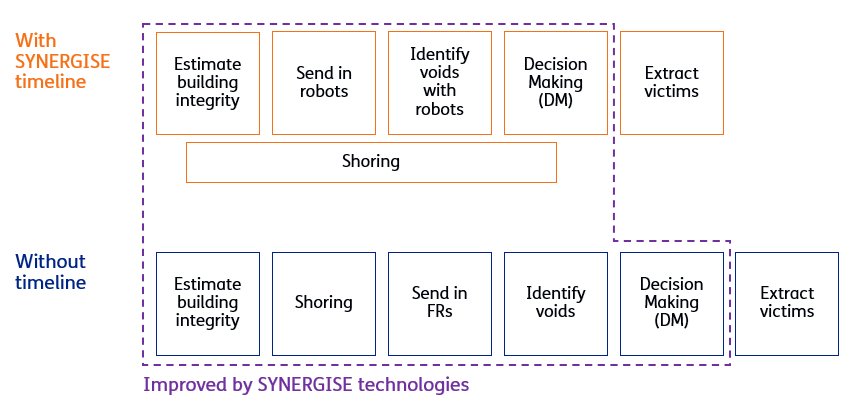
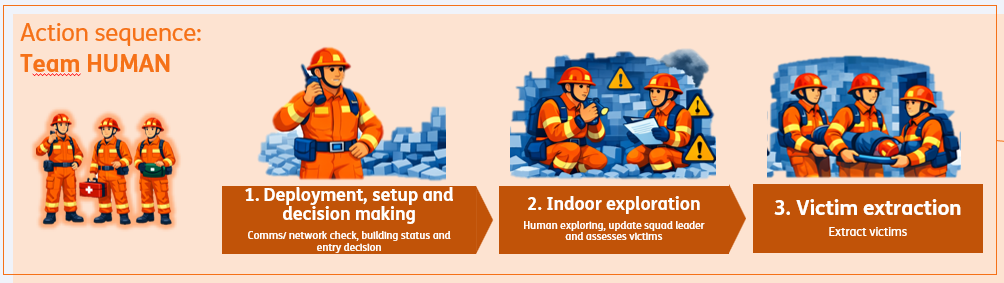 | ||
| Baseline phases | Who fills it | Main purpose |
| Briefing | - | - |
| Estimate building integrity | - | - |
| Shoring | Particpants | (make estimation about shoring time) |
| Before sending in FRs (DM) | Participant | Ground truth/ baseline SA |
| Send in FRs, identify voids, DM | Evaluation leader | Objective performance, safety, timing, decision making |
| FRs exit building | Participant | Subjective SA, trust, workload, decision making |
| Hotwash | ||
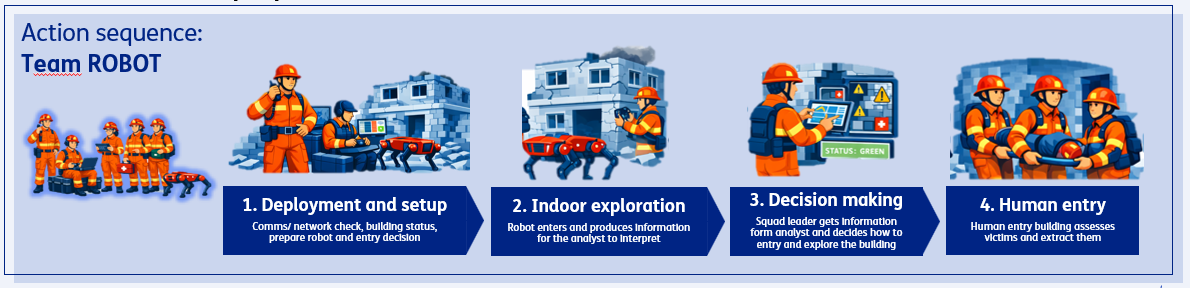 | ||
| SYNERGISE phases | Who fills it | Main purpose |
| Briefing | - | - |
| Estimate building integrity | - | - |
| Send in robots, identify voids with robots | - | - |
| Decision Making (DM) | Participants (Squad/ team leader) | Ground truth/ baseline SA |
| Send in FRs ? | Evaluation leader | Objective performance, safety, timing, decision making |
| After test | Paricipant | Subjective SA, trust, workload, decision making |
| Hotwash | ||
List of ground truths needed for comparison:
- Health ranges
- hazards/ victims in buildings + Safest path within buildings : Safety observations + path observations >> have a premade map with everything and note down the route. Have an expert rate it after the fact.
- Decision quality: have expert (or team leaders) rate the path of the FRs inside
- State of automation (tech question)
Templates per role
Template: Evaluation leader (Field) | |||||||||||||
General: Trial type/ Building/ scenario ID: ................................. | Date/ Time: ....................................... | Condition (encircle): Baseline / SYNERGISE-tech supported | |||||||||||||
System & mission readiness (Tick list based on predefined acceptable ranges. Cross out if not applicable.) | ☐ C3I operational, describe: ....................................................................................................................................................................................................................... ☐ Health & location sensors connected, describe: ..................................................................................................................................................................................... ☐ Acceptable/ baseline health ranges defined (HR, temperature, etc.), describe: ..................................................................................................................................... ☐ OWL operational, describe: ..................................................................................................................................................................................................................... ☐ ANYmal operational, describe: ................................................................................................................................................................................................................ ☐ ANYmal with robot arm operational, describe: ........................................................................................................................................................................................ ☐ ANYmal with SNAKE, describe: .............................................................................................................................................................................................................. | ||||||||||||
| PRE-ENTRY PHASE (after briefing; before actual start of scenario) | |||||||||||||
| Hand out questionnaires | Each role their own question for this section | ||||||||||||
Start time of scenario | Timestamp of start of the scenario:..................................................................................... | ||||||||||||
| DURING ENTRY PHASE | |||||||||||||
(if squad leader gets a questionnaire after DM, before human entry; pause timer or enter timestamps) | Timestamp of entering:..................................................................................... | Timestamp of exiting:........................................................................................................... | ||||||||||||
Time within building/ hazard zone (humans) | Timestamp of entering:..................................................................................... | Timestamp of exiting:........................................................................................................... Timestamp of entering:..................................................................................... | Timestamp of exiting:........................................................................................................... | ||||||||||||
Time within building/ hazard zone (robots) | Timestamp of entering:..................................................................................... | Timestamp of exiting:........................................................................................................... Timestamp of entering:..................................................................................... | Timestamp of exiting:........................................................................................................... | ||||||||||||
Events with timestamp | Timestamp of victim detected:......................................................................... | Timestamp of victim detected:............................................................................................. Timestamp of victim detected:......................................................................... | Timestamp of victim detected:............................................................................................. Timestamp of manual robot control takeover:.................................................. | Timestamp of manual robot control takeover:.................................................................... Timestamp of manual robot control takeover:.................................................. | Timestamp of manual robot control takeover:.................................................................... Timestamp of health sensor notification:......................................................... | Timestamp of health sensor notification:............................................................................ Timestamp of health sensor notification:......................................................... | Timestamp of health sensor notification:............................................................................ | ||||||||||||
| End time of scenario | Timestamp of finishing the scenario:........................................................................................................ | ||||||||||||
| POST EXIT PHASE (hot wash) | |||||||||||||
| Give every role their questionnaire | |||||||||||||
| Plenary questions: |
| ||||||||||||
Template: Squad/ Team leader (Field) | |||||||||||||||||||||||||||||||||||||||||||||||||||||||||
General: Trial type/ Building/ scenario ID: ................................. | Date/ Time: ....................................... | Condition (encircle): Baseline / SYNERGISE-tech supported | |||||||||||||||||||||||||||||||||||||||||||||||||||||||||
| PRE-ENTRY PHASE (after briefing; before actual start of scenario) | |||||||||||||||||||||||||||||||||||||||||||||||||||||||||
| Baseline robot/ automation experience |
| ||||||||||||||||||||||||||||||||||||||||||||||||||||||||
(CL01) Safety Plan Confirmation | Mark chosen entry path on provided building map. Sketch or describe entry path. (Sketch space)
| ||||||||||||||||||||||||||||||||||||||||||||||||||||||||
| (CL02) Situation Awareness (SAGAT; Endsley 1988): | List expected hazards and victims with details (e.g. location, gender, age, status). (Bullets and/ or sketch)
| ||||||||||||||||||||||||||||||||||||||||||||||||||||||||
(CL02) Situation Awareness interior (SAGAT; Endsley 1988):
| Sketch/ Describe expected interior layout. (Sketch space)
| ||||||||||||||||||||||||||||||||||||||||||||||||||||||||
| (CL04) Trust in automation (Baseline Scale of Trust in Automated Systems; Jian et al. 2000). IF SYNERGISE TECH SCENARIO |
| ||||||||||||||||||||||||||||||||||||||||||||||||||||||||
| HUMAN ENTRY PHASE | |||||||||||||||||||||||||||||||||||||||||||||||||||||||||
| (CL02 optional; if pause is feasable) Situation Awareness (mid-mission SAGAT probe; Endsley 1988) | Where are you team members now and what hazards are near them? (Sketch space)
| ||||||||||||||||||||||||||||||||||||||||||||||||||||||||
| POST EXIT PHASE (hot wash) | |||||||||||||||||||||||||||||||||||||||||||||||||||||||||
(CL01) Safety Decision Quality Rating (AAR-based; U.S. Army, 1993): |
| ||||||||||||||||||||||||||||||||||||||||||||||||||||||||
(CL01) Safety Error Self-Assessment | List any unsafe or mistaken decisions you recognize from this mission (if any). (Provide brief descriptions)
| ||||||||||||||||||||||||||||||||||||||||||||||||||||||||
(CL02) Situation Awareness (Post-Scenario SAGAT) | From memory, sketch the interior layout and mark all hazards and victims encountered with list of details (e.g. location, gender, age, status). (Sketch space and bullets)
| ||||||||||||||||||||||||||||||||||||||||||||||||||||||||
| (CL03) Workload (NASA-TLX; Hart & Staveland 1988) |
| ||||||||||||||||||||||||||||||||||||||||||||||||||||||||
(CL04) Trust (Post-Use Trust in Automation scale; Jian et al. 2000) IF SYNERGISE TECH SCENARIO |
| ||||||||||||||||||||||||||||||||||||||||||||||||||||||||






Template: Robot operator | |||||||||||||||||||||||||||||||||||||||||||||||||
General: Trial type/ Building/ scenario ID: ................................. | Date/ Time: ....................................... | Condition (encircle): | |||||||||||||||||||||||||||||||||||||||||||||||||
| PRE-ENTRY PHASE (after briefing; before actual start of scenario) | |||||||||||||||||||||||||||||||||||||||||||||||||
| Baseline robot/ automation experience |
| ||||||||||||||||||||||||||||||||||||||||||||||||
| (CL04) Trust in automation (Baseline Scale of Trust in Automated Systems; Jian et al. 2000). |
| ||||||||||||||||||||||||||||||||||||||||||||||||
| AFTER ROBOT entry | |||||||||||||||||||||||||||||||||||||||||||||||||
(CL02) Situation Awareness Robot Reconnaissance data understanding (OPTIONAL; is more important for the analyst) | After the robot’s initial run but before humans enter, list any hazards, obstacles, or victims that you (as operator) detected or suspect from the robot’s feed with list of details (e.g. location, gender, age, status). (Open list)
| ||||||||||||||||||||||||||||||||||||||||||||||||
| POST EXIT PHASE (hot wash) | |||||||||||||||||||||||||||||||||||||||||||||||||
(CL01) SafetyTeam Decision Appraisal: |
| ||||||||||||||||||||||||||||||||||||||||||||||||
(CL01) Safety Error Reflection | List any mistakes or unsafe decisions you think occurred regarding robot deployment. (Open question)
| ||||||||||||||||||||||||||||||||||||||||||||||||
(CL02) Situation Awareness (Post-Scenario SAGAT) | Describe what the robot observed/ found during the mission (e.g. hazards, obstacles) for navigation purposes. (Sketch space and bullets)
| ||||||||||||||||||||||||||||||||||||||||||||||||
| (CL03) Workload (NASA-TLX; Hart & Staveland 1988) |
| ||||||||||||||||||||||||||||||||||||||||||||||||
(CL04) Trust (Post-Use Trust in Automation scale; Jian et al. 2000) IF SYNERGISE TECH SCENARIO |
| ||||||||||||||||||||||||||||||||||||||||||||||||
Template: Robot analyst | |||||||||||||||||||||||||||||||||||||||||||||||||
General: Trial type/ Building/ scenario ID: ................................. | Date/ Time: ....................................... | Condition (encircle): | |||||||||||||||||||||||||||||||||||||||||||||||||
| PRE-ENTRY PHASE (after briefing; before actual start of scenario) | |||||||||||||||||||||||||||||||||||||||||||||||||
| Baseline robot/ automation experience |
| ||||||||||||||||||||||||||||||||||||||||||||||||
(CL01) Safety Plan Confirmation | Mark chosen entry path on provided building map. Sketch or describe entry path. (Sketch space)
| ||||||||||||||||||||||||||||||||||||||||||||||||
| (CL02) Situation Awareness (SAGAT; Endsley 1988): | List expected hazards and victims with details (e.g. location, gender, age, status). (Bullets and/ or sketch)
| ||||||||||||||||||||||||||||||||||||||||||||||||
| (CL04) Trust in automation (Baseline Scale of Trust in Automated Systems; Jian et al. 2000). |
| ||||||||||||||||||||||||||||||||||||||||||||||||
| POST EXIT PHASE (hot wash) | |||||||||||||||||||||||||||||||||||||||||||||||||
(CL01) SafetyTeam Decision Appraisal: |
| ||||||||||||||||||||||||||||||||||||||||||||||||
(CL01) Safety Error Reflection | List any mistakes or unsafe decisions you think occurred regarding robot deployment. (Open question)
| ||||||||||||||||||||||||||||||||||||||||||||||||
(CL02) Situation Awareness (Post-Scenario SAGAT) | Now that the mission is over, summarize the final floor layout, and list all hazards and victims found or confirmed. (Sketch space and bullets)
| ||||||||||||||||||||||||||||||||||||||||||||||||
| (CL03) Workload (NASA-TLX; Hart & Staveland 1988) |
| ||||||||||||||||||||||||||||||||||||||||||||||||
(CL04) Trust (Post-Use Trust in Automation scale; Jian et al. 2000) |
| ||||||||||||||||||||||||||||||||||||||||||||||||
Template: Entry team member | |||||||||||||||||||||||||||||||||||||||||||||||||
General: Trial type/ Building/ scenario ID: ................................. | Date/ Time: ....................................... | Condition (encircle): Baseline / SYNERGISE-tech supported | |||||||||||||||||||||||||||||||||||||||||||||||||
| PRE-ENTRY PHASE (after briefing; before actual start of scenario) | |||||||||||||||||||||||||||||||||||||||||||||||||
| Baseline robot/ automation experience |
| ||||||||||||||||||||||||||||||||||||||||||||||||
(CL01) Safety Plan Confirmation | Mark chosen entry path on provided building map. Sketch or describe entry path. (Sketch space)
| ||||||||||||||||||||||||||||||||||||||||||||||||
| (CL02) Situation Awareness (SAGAT; Endsley 1988): | List expected hazards and victims with details (e.g. location, gender, age, status). (Bullets and/ or sketch)
| ||||||||||||||||||||||||||||||||||||||||||||||||
| (CL04) Trust in automation (Baseline Scale of Trust in Automated Systems; Jian et al. 2000). IF SYNERGISE TECH SCENARIO |
| ||||||||||||||||||||||||||||||||||||||||||||||||
| POST EXIT PHASE (hot wash) | |||||||||||||||||||||||||||||||||||||||||||||||||
(CL01) Safety - Team Decision Appraisal: |
| ||||||||||||||||||||||||||||||||||||||||||||||||
(CL02) Situation Awareness Post Operation Recall | Describe the layout and list all hazards/victims that were found with details (e.g. location, gender, age, status). (Sketch and describe)
| ||||||||||||||||||||||||||||||||||||||||||||||||
| (CL03) Workload (NASA-TLX; Hart & Staveland 1988) |
| ||||||||||||||||||||||||||||||||||||||||||||||||
(CL04) Trust (Post-Use Trust in Automation scale; Jian et al. 2000) IF SYNERGISE TECH SCENARIO |
| ||||||||||||||||||||||||||||||||||||||||||||||||
Template: Base of Operations (LEMA) | |||||||||||||||||||||||||||||||||||||||||||||||||
General: Trial type/ Building/ scenario ID: ................................. | Date/ Time: ....................................... | Condition (encircle): Baseline / SYNERGISE-tech supported | |||||||||||||||||||||||||||||||||||||||||||||||||
| RE-ENTRY PHASE (after briefing; before actual start of scenario) | |||||||||||||||||||||||||||||||||||||||||||||||||
| Baseline robot/ automation experience |
| ||||||||||||||||||||||||||||||||||||||||||||||||
| (CL04) Trust in automation (Baseline Scale of Trust in Automated Systems; Jian et al. 2000). IF SYNERGISE TECH SCENARIO |
| ||||||||||||||||||||||||||||||||||||||||||||||||
| POST EXIT PHASE (hot wash) | |||||||||||||||||||||||||||||||||||||||||||||||||
(CL04) Trust (Post-Use Trust in Automation scale; Jian et al. 2000) IF SYNERGISE TECH SCENARIO |
| ||||||||||||||||||||||||||||||||||||||||||||||||
| (CL03) Workload (NASA-TLX; Hart & Staveland 1988) |
| ||||||||||||||||||||||||||||||||||||||||||||||||
Before humans enter a building/ hazard
| Claim | Measurement | What is recorded | Who records |
| CL01 Safety | Ground-truth safe paths | predefined safe/ suboptimal / unsafe paths | Evaluation leader |
CL01 Safety | Chosen entry path | Intended entry path selection | Squad/ Team leader (informed by Robot analyst) |
CL02 Situation Awareness | Reported hazards, victims, layout (pre) | Sketch / map / description of interior | Squad/ Team leader, Entry team, Robot analyst (separately) |
CL02 SA | Robot‑based expectations | Expected hazards / victims from robot data | Robot analyst |
| CL05 Trustworthy SA | Baseline trust (optional) | Initial trust in system/ robot | Squad/ Team leader, Robot operator, Robot analyst |
CL06 Health | Acceptable health ranges | HR, temp thresholds | Evaluation leader |
CL07 Efficiency | Mission start timestamp | End briefing → start | Evaluation leader |
During humans/robots are inside building/ hazard
| Claim | Measurement | What is recorded | Who records |
CL01 Safety | Near‑incidents | Unsafe situations / close calls | Evaluation leader |
CL01 Safety | Hazard avoidance | Avoided predefined hazards | Evaluation leader |
CL02 SA | Executed path | Actual path taken | Evaluation leader, Engage system/ location sensors  |
CL02 SA | Path deviations | Deviations + cause (something for after instead?) | Squad/ Team leader, Entry team |
CL02 SA | Interpretations of robot images | ...? | Robot analyst (and Base or Operations/ LEMA ?) |
CL02 SA (Optional) | Robot control actions | Overrides, manual interventions | Robot operator |
CL06 Health | Threshold breach | Breach moment (HR, temp, stress | Evaluation leader |
CL06 Health | Detection & intervention | Detection with corresponding action | Evaluation leader |
CL07 Efficiency | Entry timestamp | Entry team enters OR robot enters | Evaluation leader |
CL07 Efficiency | Exit timestamp | Entry team exits OR robot exits | Evaluation leader |
After humans/robots exited building/hazard
| Claim | Measurement | What is recorded | Who records |
CL01 Safety |
Decision quality (retro) |
“How good were decisions?” | Squad/ Team leader, Entry team, Robot operator, Robot analyst, Baes of Operations/ LEMA |
CL01 Safety | Error reflection | Reflected unsafe choices | Squad/ Team leader, Robot operator, Robot analyst |
CL02 SA | Reported hazards, victims, layout (post) | Sketch / map / description | Squad/ Team leader, Entry team, Robot analyst |
| CL03 mission effectiveness | Decision and path quality | Route of FRs, decisions made. | Squad/ Team leader, Entry team, Robot analyst |
CL04 acceptable workload | Workload | Short NASA‑TLX | Squad/ Team leader, Entry team, Robot operator, Robot analyst, Baes of Operations/ LEMA |
CL05 Trustworthy SA | Trust | Trust survey / interview | Squad/ Team leader, Entry team , Robot operator, Robot analyst, Baes of Operations/ LEMA |
CL06 Health | Health issue handling | Adequacy & timeliness | Evaluation leader (+ expert) |
CL07 Efficiency | Total mission duration | Start (end briefing) till end | Evaluation leader |